Water, a heritage that looks to the future
In South Korea, experts gathered at the 48th session of UNESCO's World Heritage Committee discussed how ancient water systems can provide answers to the challenges of sustainability and climate change.
For centuries, understanding the behavior of water was a matter of survival. Measuring river levels, anticipating floods or droughts, and transforming those observations into agricultural decisions allowed different civilizations to organize their production and adapt to nature's cycles. Today, with a present marked by climate change, water scarcity, and extreme weather events, those methods of observing and managing this vital resource are once again at the center of discussion, to be used as tools for the future.
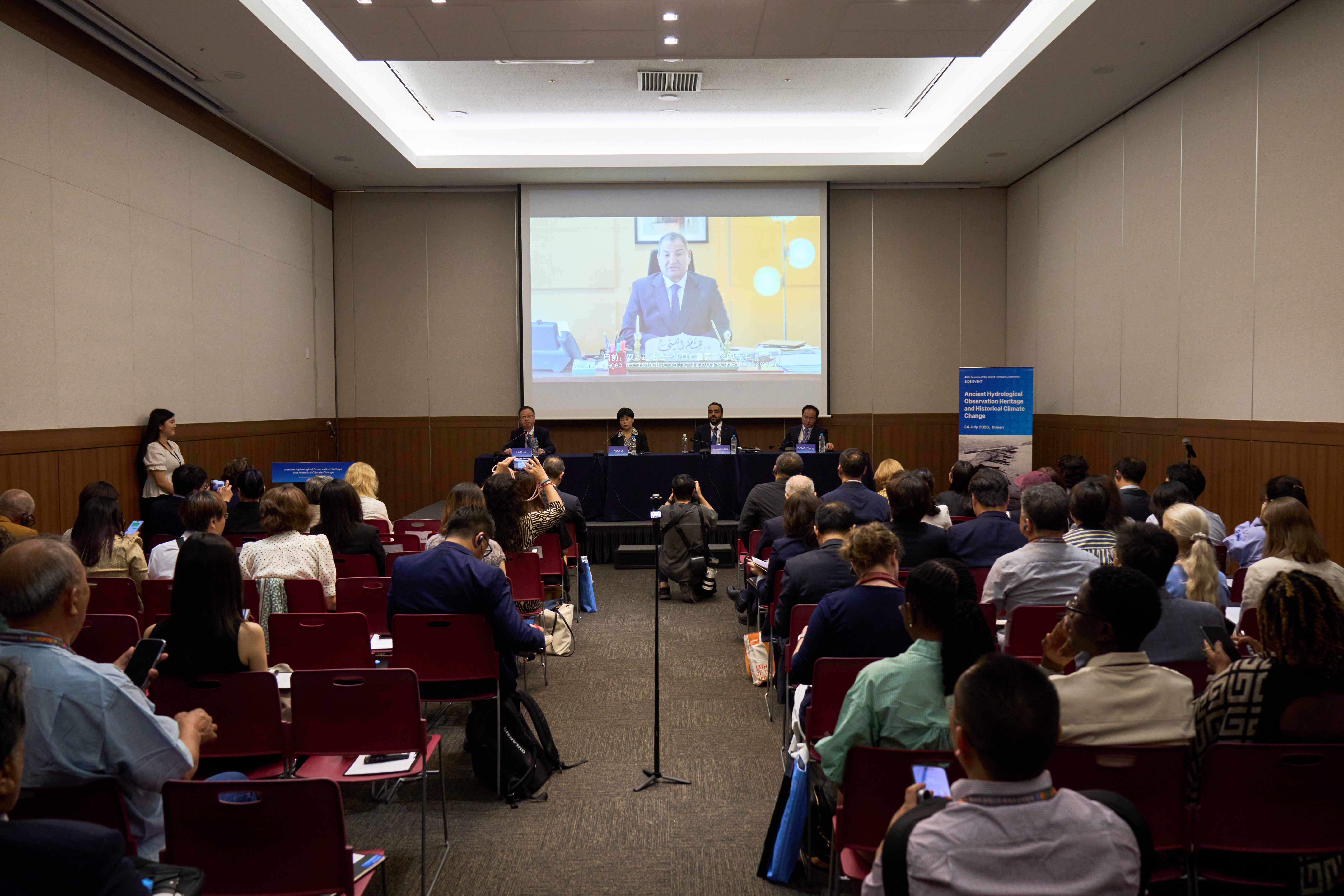
This was the central theme of “ Ancient Hydrological Observation Heritage and Historical Climate Change, ” an event held at the Busan Exhibition and Convention Center (BEXCO) in South Korea during the 48th session of the UNESCO World Heritage Committee . The meeting was organized by the National Cultural Heritage Administration of China, the Supreme Council of Antiquities of Egypt, and the Chongqing Municipal People’s Government.
In a packed room, four specialists, from different perspectives, traced a journey that began with the great rivers of ancient civilizations and ended with a question of enormous relevance today: what can that knowledge contribute to facing the water and climate challenges of the present and the future?
Ahmed Rehema , assistant to the Egyptian Minister of Tourism and Antiquities and an archaeologist specializing in underwater archaeology, reconstructed the relationship between the Nile and Egyptian civilization using the Nilometer, the system used to measure the river's level during its annual floods , and reviewed three different designs. Yan Haiming , deputy director of the China World Cultural Heritage Center at the Chinese Academy of Cultural Heritage, found a remarkable parallel with the Yangtze River and the Baiheliang records , now preserved in situ within an underwater museum.
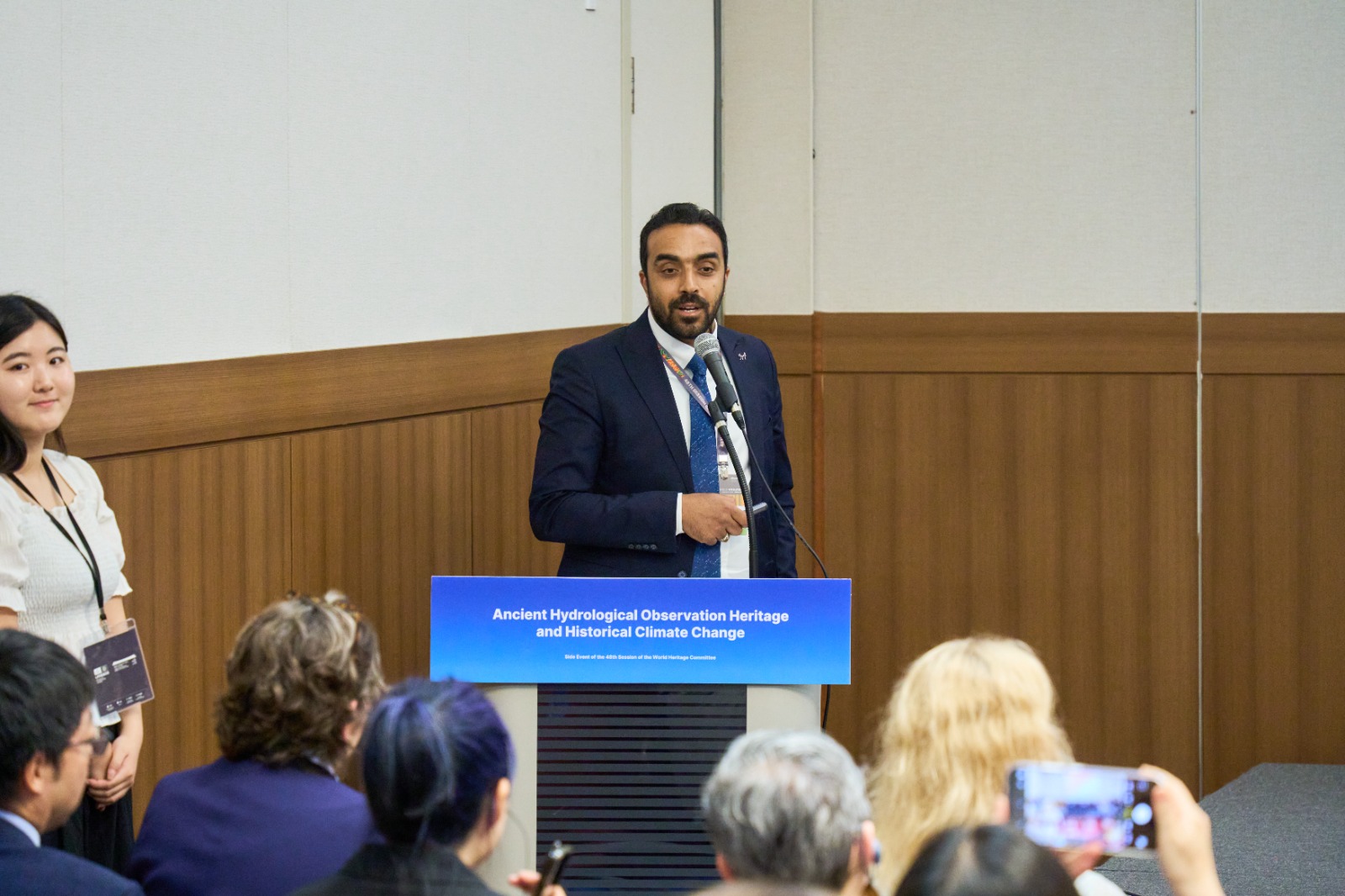
Ahmed Rehema, from the Egyptian Ministry of Tourism and Antiquities, during his presentation on the Nile and ancient nilometers.
Carolina Castellanos , head of Research at WHITR-AP Shanghai and a specialist in World Heritage management, brought those experiences into the present to argue that these systems should not only be preserved as testimonies of the past, but also for the knowledge they contain for sustainability and climate adaptation .
Meisha Hunter , president of the International Scientific Committee on Water and Heritage, completed the debate, through a recorded presentation, with a look at traditional water management systems and their relevance in the face of current challenges.
Deciphering the Nile
Ahmed Rehema led the discussion to the Nile, around which the production and life of ancient Egypt were organized. “ Behind the Nile River lay the great story of Egyptian civilization. The entire civilization was linked to the floods and the annual cycle of the inundations ,” he argued. Its waters made agriculture and fishing possible, but also navigation and trade, for which archaeological evidence has been found even underwater in Abu Qir Bay.
Prosperity coexisted with risk: “Sometimes floods could destroy everything.” The need to harness the floods and mitigate their consequences led the Egyptians to develop nilometers to measure the river's level . Rehema described three models: staircases with height markings; channels that carried water to wells or cisterns; and graduated columns within stone structures, such as the Nilometer on Rhoda Island in Cairo.
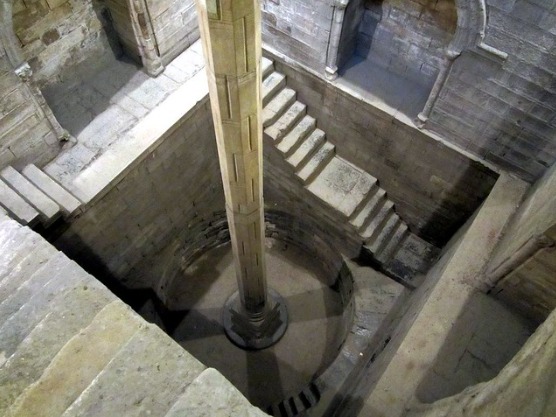
The Nilometer on Rhoda Island, in Cairo, used for centuries to measure the level of the Nile and record its floods.
Her presentation raised an idea that would permeate the rest of the meeting: observing water, recording its variations, and learning from them was a tool for adapting to uncertainty. “I always say that great civilizations need great rivers ,” Rehema summarized. This parallel brought Egypt and China closer together, and they have been working together since 2023 to promote a joint nomination of the Nile and the Baiheliang inscriptions to the World Heritage List. “Egypt and China decided to go it together,” she emphasized.
In a brief but significant visit, one of the directors of the UNESCO World Heritage Committee took to the stage unexpectedly to support the initiative and highlighted the opportunity these meetings offer to promote forms of cooperation that were not considered until a few years ago.
“Working on World Heritage is not just about bringing together great civilizations, but also about bringing people together,” he said. For the official, the value of comparing Baiheliang and the Nilometer goes beyond their preservation: their records allow for the study of the relationship between societies, rivers, and climate over long periods, and can complement modern scientific observations.
In that regard, he stressed that cooperation between Chinese and Egyptian specialists can generate new knowledge and strengthen collective capacities: “I am convinced that this type of exchange contributes to building collective capacity, because it is the only way to continue advancing innovative approaches to climate adaptation.”
Underwater logs
Yan Haiming took that same question to the Yangtze River. In Baiheliang, Chongqing, ancient communities had learned to relate the river level to agricultural yields and used stone fish as a reference. “ When the eyes of the stone fish were above the water level, it meant it would be a year of good harvest ,” he explained. Successive inscriptions eventually formed an exceptional record of water observation across generations.
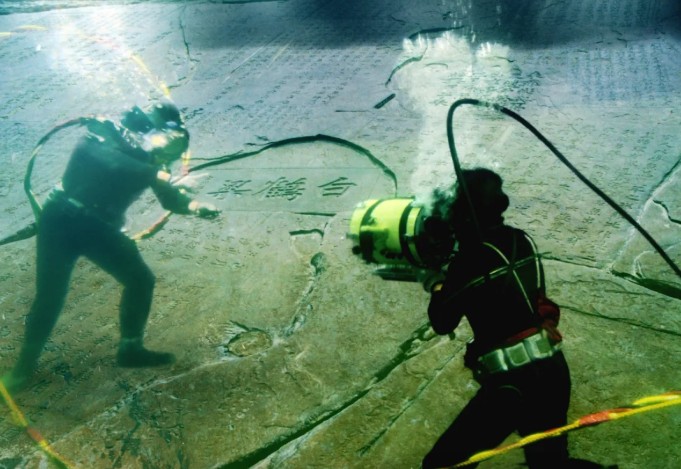
The Baiheliang inscriptions, preserved under the waters of the Yangtze River in China.
The construction of the Three Gorges Dam completely changed the fate of the site: the inscriptions would be submerged at a depth of about 40 meters. To preserve them, China built a unique underwater museum that requires visitors to descend to that level and pass through a tunnel before reaching the gallery. There, the inscriptions remain in situ , underwater, and can be viewed through large windows from a pressure-resistant structure. Contemporary engineering thus made it possible to preserve, in the same river, an observation system built over centuries to understand it.
For Yan, there appears a scientific connection with the Nilometer: both are located in large basins and preserve more than a thousand years of hydrological observations , with information capable of providing clues about the climate and social changes of the past.
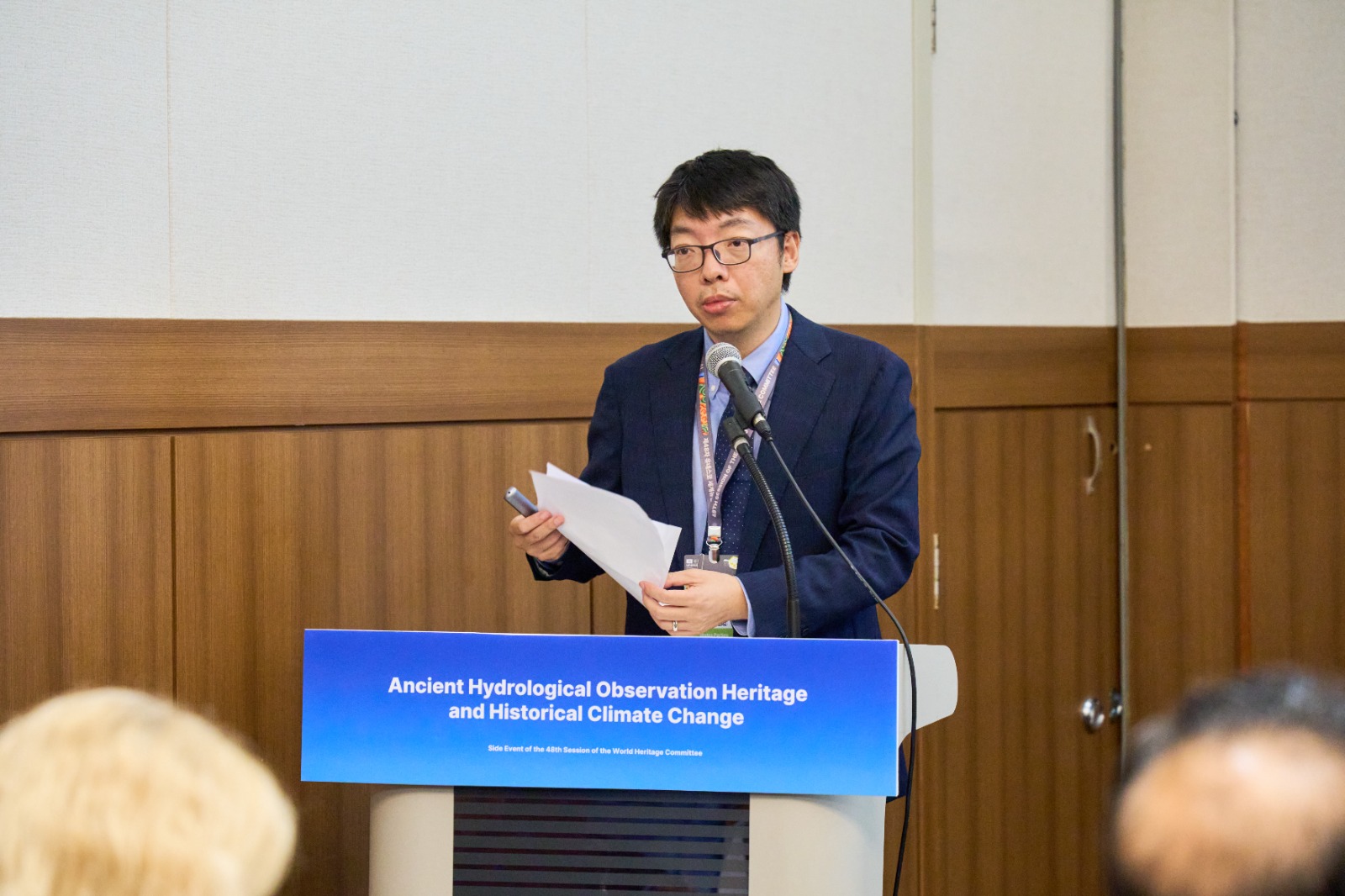
Yan Haiming spoke about the hydrological records of Baiheliang and their value in studying climate change.
The specialist proposed investigating whether certain climatic fluctuations could have simultaneously affected the Nile and the Yangtze rivers, and to promote new forms of observation and agricultural technology. He was cautious about the scope: “It’s a very preliminary idea. We hope to obtain more scientific data and establish correlations between different datasets in the future.” He emphasized its relevance today: studying these records, he maintained, can “offer new perspectives for addressing the contemporary challenges of climate change.”
Revitalize the heritage
Carolina Castellanos brought the discussion of historical records into the present with a premise: “ Let us consider water not only as a resource, but as a repository of human knowledge spanning millennia .” Wells, rain gauges, canals, and flood markers, she argued, are not mere vestiges, but “living systems that hold keys to our shared future.” She cited the state-run rainfall measurement network established in Korea in 1442 and an Iranian hydraulic structure spanning approximately 100 kilometers and comprising more than 2,000 wells, used for over 3,000 years , as examples of knowledge built and passed down through generations.
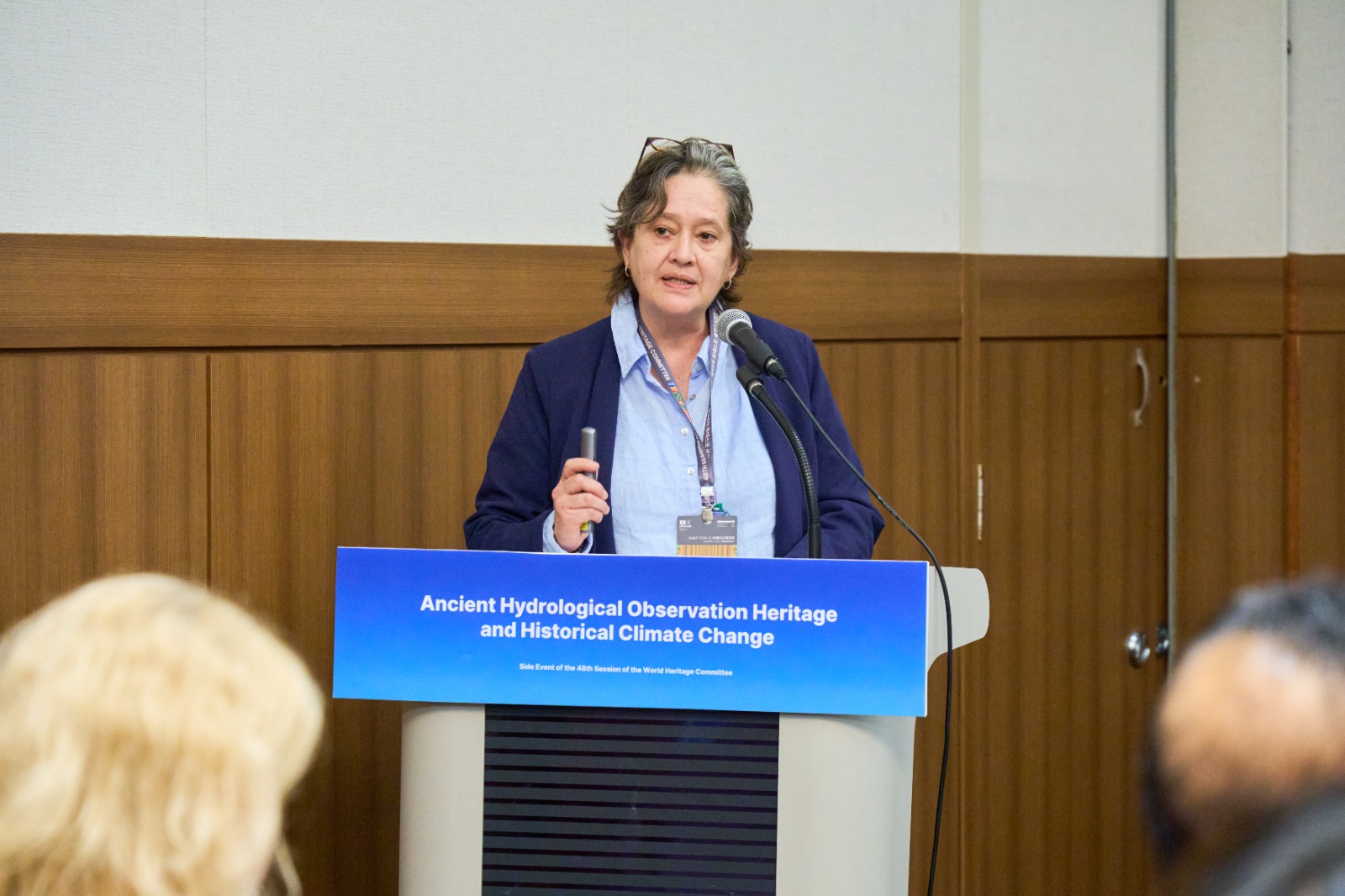
Carolina Castellanos, Head of Research at WHITRAP Shanghai: “We must move from preservation to revitalization.”
Her proposal was one of the most emphatic of the meeting: “ We must move from preservation to revitalization.” Protecting and documenting , she explained, is no longer enough: that knowledge must be connected to current needs. Castellanos spoke of historical systems reactivated to confront droughts and adapt to climate change and was emphatic: “These are not just feats of engineering. They are human interactions with water.” For the specialist, preserving this heritage is closely linked to hydrological sustainability and the capacity of societies to respond to increasingly uncertain climate scenarios.
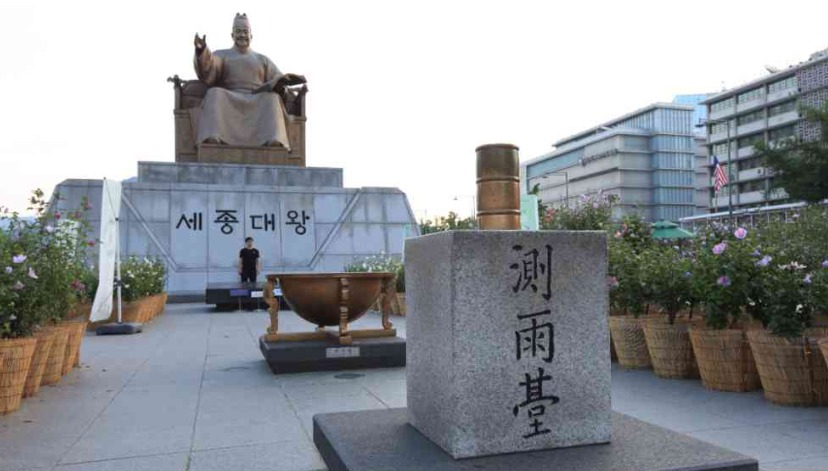
The Cheugugi, Korea's first official rain gauge, was created in 1441 during the Joseon Dynasty to measure and record rainfall (KoreaKHW/Shutterstock).
Sustainability permeated her entire presentation. She proposed incorporating traditional knowledge and water heritage into policies and planning to strengthen climate resilience, food and water security, and ecosystem services through financing, monitoring, data integration, and interdisciplinary research. She also noted that historical water management practices contribute to the 17 Sustainable Development Goals and asserted: “These are not merely historical artifacts; they are essential for modern water security.”
Castellanos insisted that these systems can offer resilience that goes beyond modern engineering: they require little energy and few resources, have a smaller carbon footprint, preserve biodiversity and strengthen ecosystems, and offer decentralized, low-cost solutions managed by the communities themselves. “They are essential strategies, not optional extras,” he emphasized.
And she delivered one of the day's most powerful warnings: “ Climate change is accelerating. Water scarcity is increasing .” Faced with this scenario, she called for preserving these systems “not merely as monuments, but as living repositories of knowledge,” and concluded with a definition that projected the entire discussion forward: “Our heritage is not separate from our sustainable future. It is its foundation.”
Managing the future
Meisha Hunter closed the presentations with a warning about the place that traditional systems still occupy in contemporary water management. The chair of the International Scientific Committee on Water and Heritage pointed out that, in addition to climate change, they face undervaluation, a lack of investment, and fragmentation among those who manage water, design public policies, and preserve heritage .
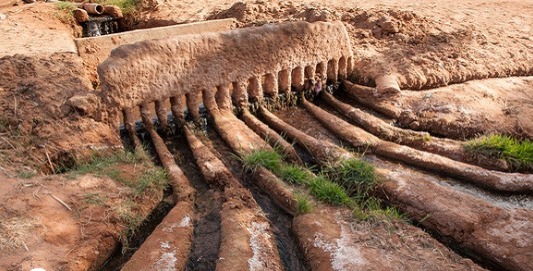
Iran's qanat system, an ancient hydraulic technology developed to conduct and distribute water in arid regions.
He also noted that around 70% of global freshwater withdrawals are for agriculture and questioned why, given the urgency to accelerate responses, "traditional water management systems and their practices are not recognized as part of the solution."
The meeting ultimately offered a forward-looking perspective: faced with climate change whose consequences are becoming increasingly visible and extreme, systems designed to observe, understand, and manage water are taking on a new dimension. This approach resonated with the 48th session of the World Heritage Committee, which once again placed sustainability, the response to climate change, and international cooperation at the heart of the discussion on how to preserve heritage for future generations.
It is no longer just about preserving them as heritage, but about recovering the knowledge they contain and incorporating it into the responses demanded by an increasingly uncertain climate scenario.