South Korea Expands Its World Heritage Sites and Strengthens a Strategic Industry
This Saturday, UNESCO added four new tidal flats to the World Heritage List. The decision reinforces a policy that links conservation, tourism, and development.
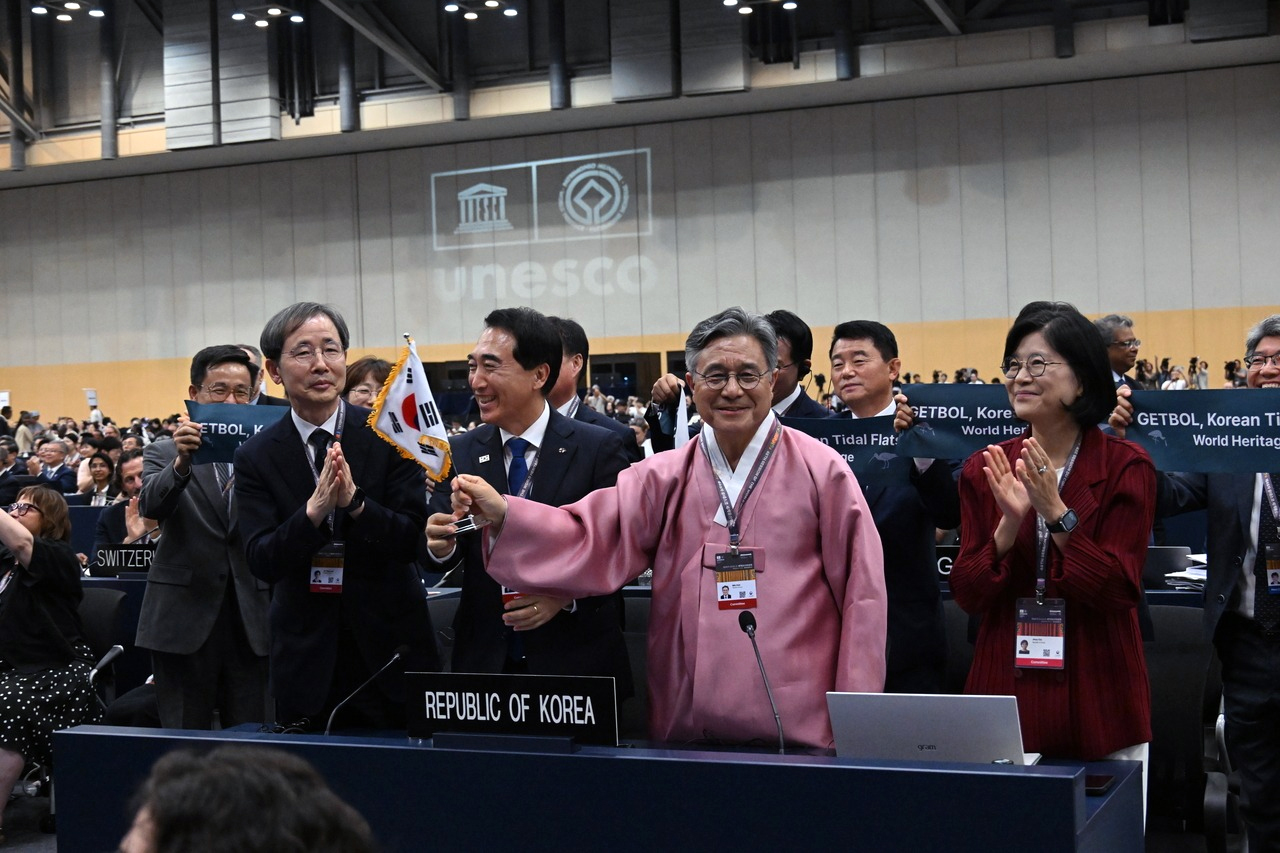
On Saturday, South Korea received one of the most significant international recognitions in recent years for its natural heritage. During the 48th session of the UNESCO World Heritage Committee, held in Busan, the organization approved the expansion of “Getbol, Korean Tidal Flats,” adding four new coastal areas to the World Heritage List. The decision reinforces a public policy through which the country seeks to make cultural and natural heritage one of the driving forces behind tourism, cultural industries, and regional development.
This international recognition comes at a time when the South Korean government is promoting the development of the so-called K-Heritage Industry, an economic ecosystem that integrates heritage, tourism, audiovisual content, gastronomy, crafts, intellectual property, and technological innovation.
The Korea Heritage Agency projects that it will generate a cumulative market value exceeding 100 trillion won (USD 68.5 billion) between 2026 and 2030, building on an industry that currently generates 9.05 trillion won (USD 6.2 billion) and aims to reach 25.2 trillion won annually (approximately USD 17.3 billion) by the end of the decade.
In this context, the expansion of the Getbol site represents a new asset for this growth strategy. For Huh Min, director of the Korea Heritage Service, the decision constitutes “an extremely significant achievement” that strengthens “both the biodiversity conservation value and the integrity of Korea’s tidal flats.”

“We hope this inscription will serve as an opportunity to further expand international cooperation,” said Huh Min.
The resolution adopted in Busan incorporates the tidal flats of Yeosu, Goheung, Muan, and Seosan into the site originally inscribed in 2021, increasing its components from four to six. With this move, South Korea expands protection of one of the most important coastal ecosystems in the Yellow Sea and adds a new draw to a policy that seeks to transform heritage into a platform for economic development and international visibility.
In an interview with Transport & Cargo, Huh Min highlighted the importance of preserving heritage for future generations and said, “It is important to preserve, enjoy, and cultivate cultural awareness.”
Heritage Industry
The expansion of the Getbol site also reinforces an economic policy. Heritage tourism represents the largest segment of the K-Heritage industry, at 4.4 trillion won (USD 3 billion), followed by heritage-inspired cultural content—such as historical dramas, video games, and webtoons—at 2.75 trillion won (USD 1.9 billion). Related industries—handicrafts, hanbok, and gastronomy—contribute 1.6 trillion won (about USD 1.1 billion), while intellectual property generates another 300 billion won (USD 205 million).
The Korea Heritage Service forecasts that the market will reach 25.2 trillion won annually (USD 17.3 billion) by 2030, with an average annual growth rate of 7.5%, driven by the digitization of heritage, content development, the use of artificial intelligence, and new technologies applied to conservation and the tourism experience.
Universal Value
The World Heritage Committee confirmed that the Korean tidal flats meet the criterion reserved for natural habitats of exceptional importance for the conservation of biodiversity and endangered species.
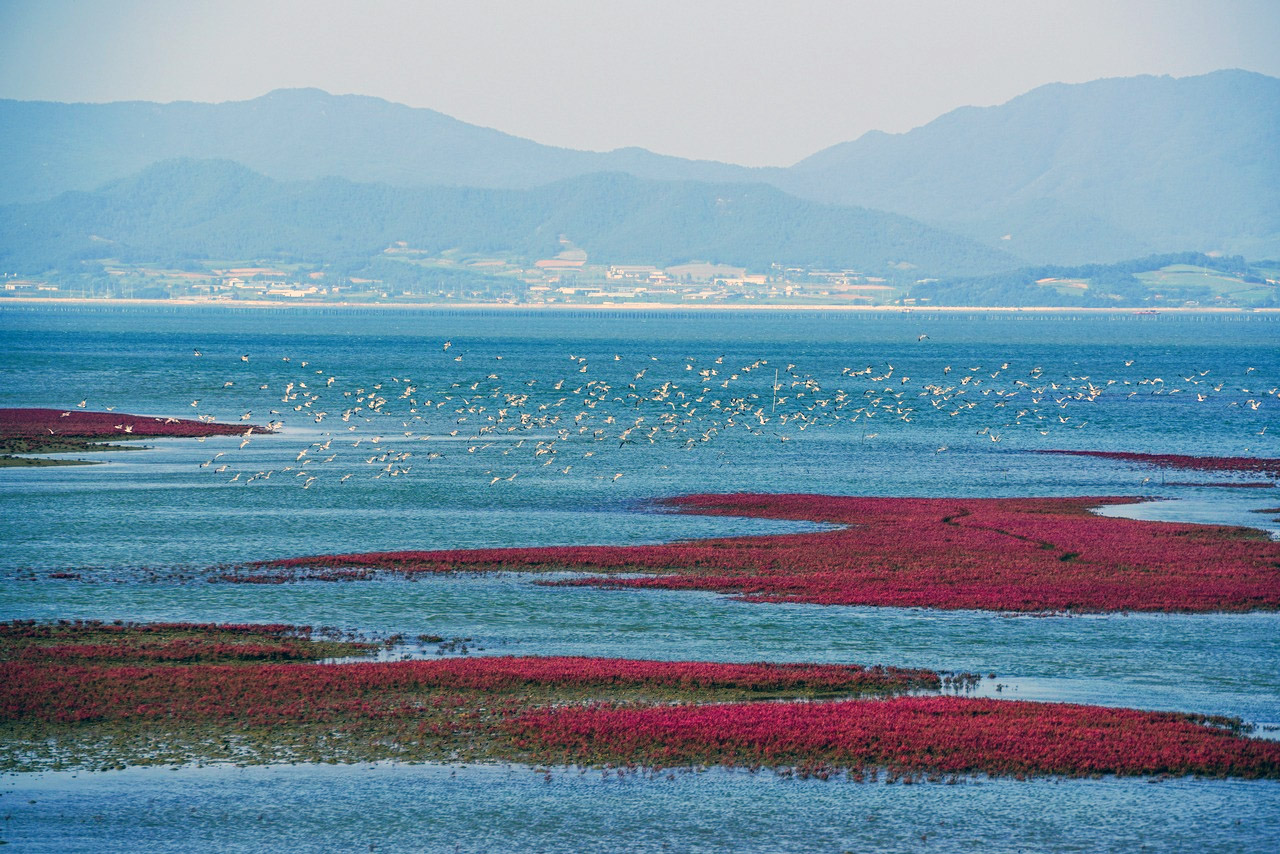
Hamhaeman Getbol of Muan. Credit: Korean Tidal Flats World Heritage Promotion Team.
The expansion adds approximately 28,000 hectares to the protected area and another 24,800 hectares as buffer zones. Following the decision, UNESCO noted that the expanded property “also represents the diversity of estuarine, open coastal, archipelagic, and semi-enclosed tidal flats,” in addition to hosting a high diversity of invertebrates and critical habitats for migratory birds and threatened species.
During the evaluation, Tim Badman, director of the World Heritage Program at the International Union for Conservation of Nature (IUCN), emphasized that “In total, the nominated property would increase the area of the existing property by nearly 22 percent.” He also stated that “The five new areas are clearly significant tidal zones for which local support for World Heritage nomination has been secured,” adding that “The property would substantially increase the number of bird species and marine biodiversity in general, and would support numerous globally threatened species and bird populations of international importance.”
Sustainable Development
UNESCO’s recognition also reaffirms a vision that South Korea has been consolidating in recent years: the conservation of natural heritage not only as an environmental policy but also as a tool for sustainable development.
Tidal flats are considered among the most productive ecosystems on the planet. In addition to harboring extraordinary biological diversity, they play a key role in maintaining the ecological balance of the Yellow Sea, protecting endangered species, and sustaining one of the world’s major bird migration routes.
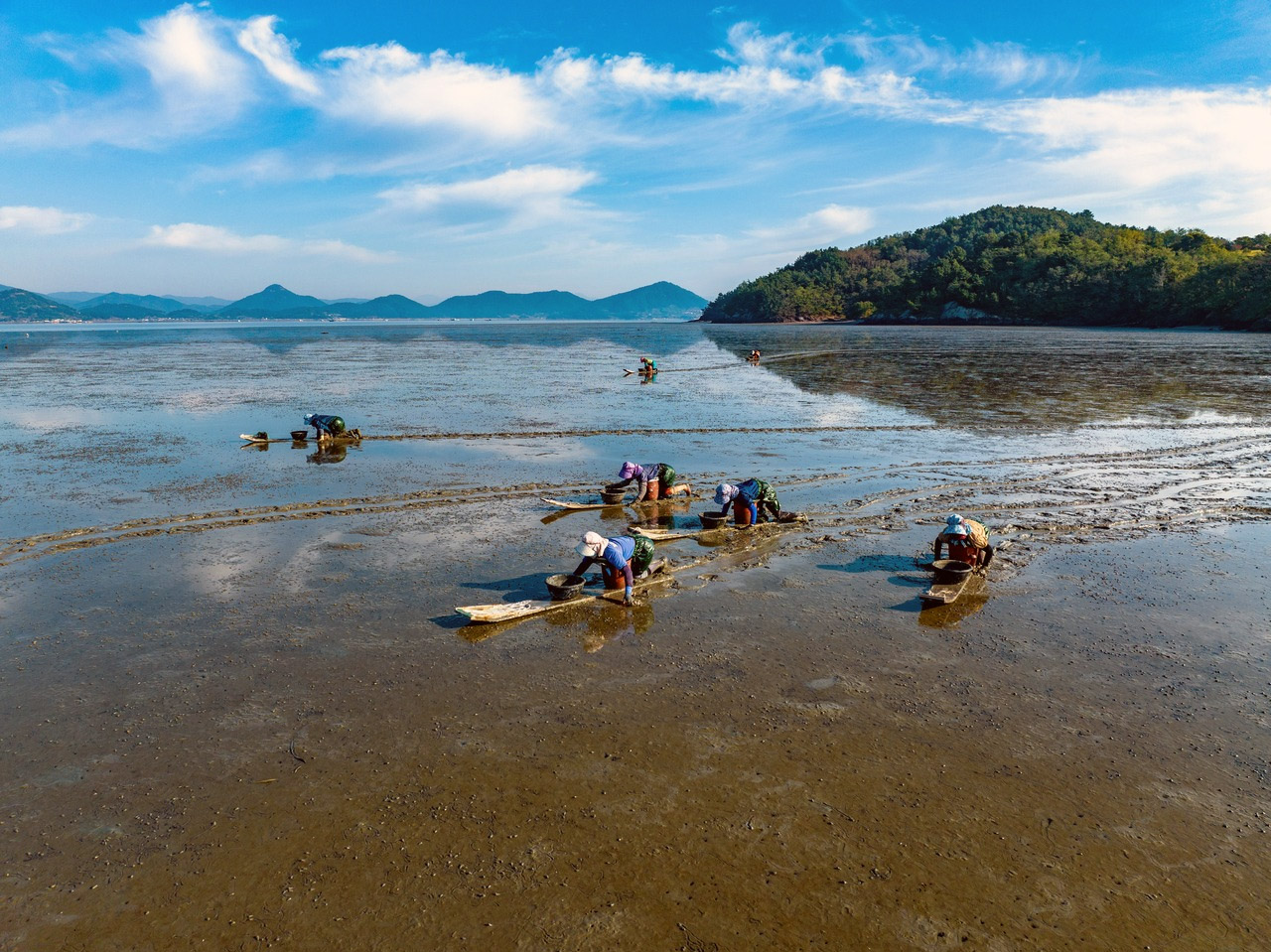 Boseong Getbol. Credit: Korean Tidal Flats World Heritage Promotion Team.
The expansion of the site strengthens this long-term management model, which combines conservation, scientific research, local community participation, and responsible tourism, with the goal of preserving the ecological value of the heritage without compromising its sustainable use for future generations.
In an interview with Transport & Cargo, Huh Min highlighted the fundamental role of artificial intelligence in cultural heritage conservation. “We are the world’s leading power in artificial intelligence, and we are using 3D scanning, drones, and digital twins to conduct research and gather all the information we need.”
Growing Tourism
The appreciation of cultural heritage is also reflected in tourism activity. According to official data from the Korea Heritage Service, Seoul’s four major royal palaces, the tombs of the Joseon Dynasty, and the Jongmyo Shrine welcomed 17.8 million visitors in 2025—a 12.9% increase from the previous year and a record high.
The number of foreign tourists reached 4.27 million, representing a year-over-year increase of 34.4%.
Min stated that South Korea welcomes more than 21 million tourists, which motivates the country to ensure the widest possible range of services and promote concrete measures so that everyone who visits the country can appreciate the value of Korean culture and its beauty.
A Diverse Heritage
With the expansion of Getbol, the Korean Tidal Flats, South Korea has 17 sites declared World Heritage by UNESCO. The first was recognized in 1995, and the most recent—the Bangucheon Stream Petroglyphs—was added in 2025.
The list includes some of the country’s most significant historical landmarks, such as Seokguram Grotto and Bulguksa Temple, Haeinsa Temple, Jongmyo Shrine, Changdeokgung Palace, Hwaseong Fortress, the Historic Areas of Gyeongju, and the Royal Tombs of the Joseon Dynasty.
Also included on the World Heritage List are Jeju Volcanic Island and Lava Tubes, the Historic Villages of Hahoe and Yangdong, Namhansanseong, the Historic Areas of Baekje, the Sansa (Buddhist Mountain Monasteries), the Seowon, Neo-Confucian Academies, the Gaya Tumuli, the Bangucheon Stream Petroglyphs, and the Korean Tidal Flats (Getbol).
In the case of Getbol, UNESCO recognized a coastal wetland ecosystem that is key to the biodiversity of the Yellow Sea and the East Asia-Australasia Migratory Route. The site expanded from four to six components with the addition of Yeosu, Goheung, Muan, and Seosan, which join Shinan, Boseong-Suncheon, Gochang, and Seocheon.
Each of these flats contributes distinct ecological characteristics: ranging from large tidal marshes and mudflats to habitats for seals, endemic crabs, and hundreds of species of migratory birds. Together, they are home to thousands of species and constitute one of Asia’s most important intertidal systems.
UNESCO highlighted that the expansion strengthens the site’s ecological connectivity and extends protection to a natural corridor of global significance, consolidating a model that combines conservation, scientific research, and sustainable development.
Global Perspective
The expansion approved in Busan at the 48th session of the UNESCO World Heritage Committee culminates a process that began following the original inscription in 2021 and recognizes the joint efforts of the Korea Heritage Service, the Ministry of Foreign Affairs, the Ministry of Oceans and Fisheries, local governments, and coastal communities.
For Huh Min, the new designation also strengthens international cooperation. “We hope this inscription will serve as an opportunity to further expand international cooperation to protect the Yellow Sea ecosystem and the East Asia-Australasia migratory route,” he said.
With this decision, South Korea expands one of its World Heritage sites and consolidates a strategy that uses natural and cultural heritage as a tool to boost tourism, attract investment, and strengthen its economy.