Busan: The City Selected by UNESCO That Set a Staggering Port Record
The terminal solidified its position among the world’s leading maritime hubs. It is the world’s second-largest transshipment hub and has recorded the highest container throughput in its history.
Busan was not chosen by chance to host the 48th session of the UNESCO World Heritage Committee. South Korea’s second-largest city now stands as one of the clearest examples of how a metropolis can combine the preservation of its historical heritage with a development strategy based on logistics, technological innovation, and sustainability.
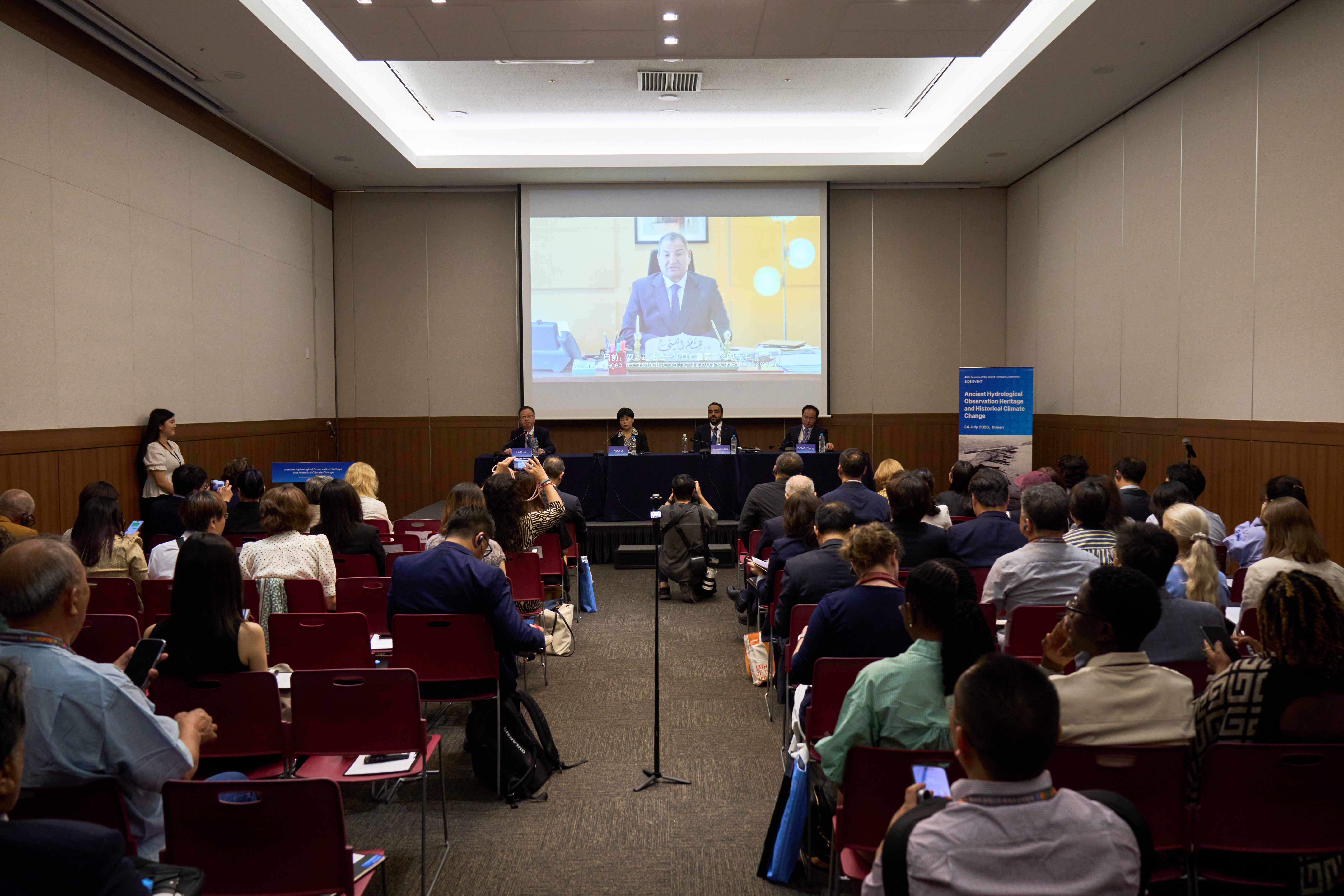
For ten days, the BEXCO convention center brought together representatives from the 21 member states of the World Heritage Committee to discuss the addition of new properties to the World Heritage List and to assess the state of conservation of already inscribed sites. It was the first time South Korea had hosted this intergovernmental body, and the city’s selection also highlighted another of its strengths.
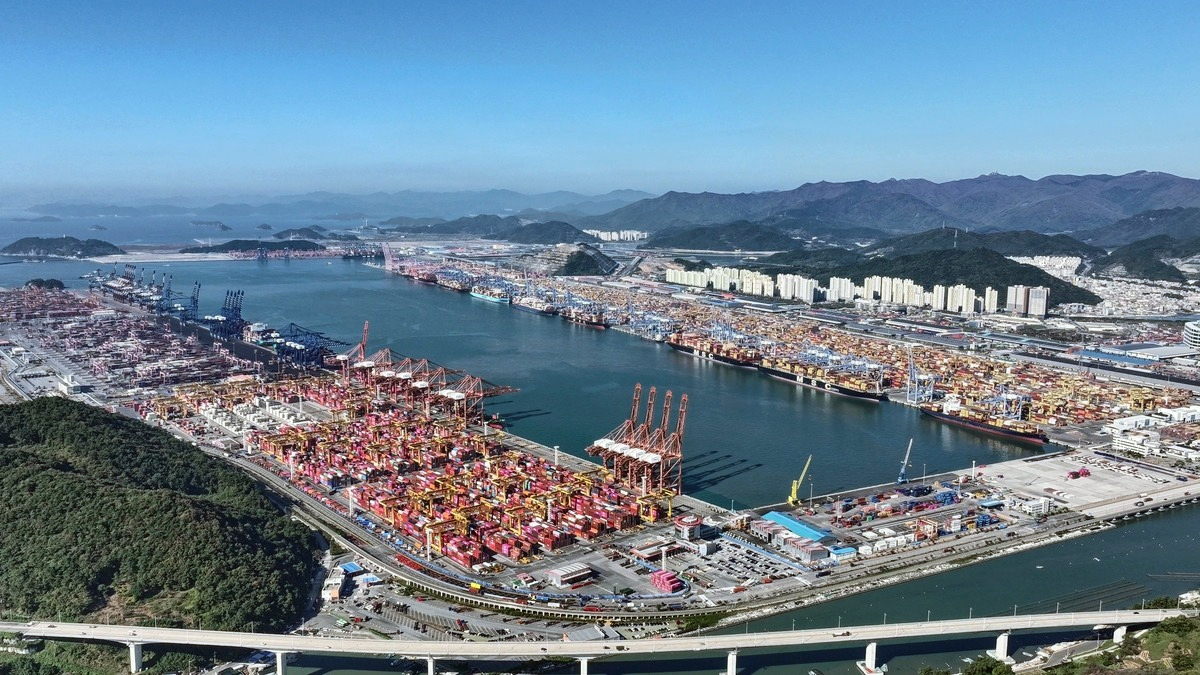
While diplomatic attention was focused on the Committee’s deliberations, the Port of Busan set a new operational record by handling 24.88 million TEUs (twenty-foot equivalent units) over the past year—a 27.9% increase compared to a decade ago.
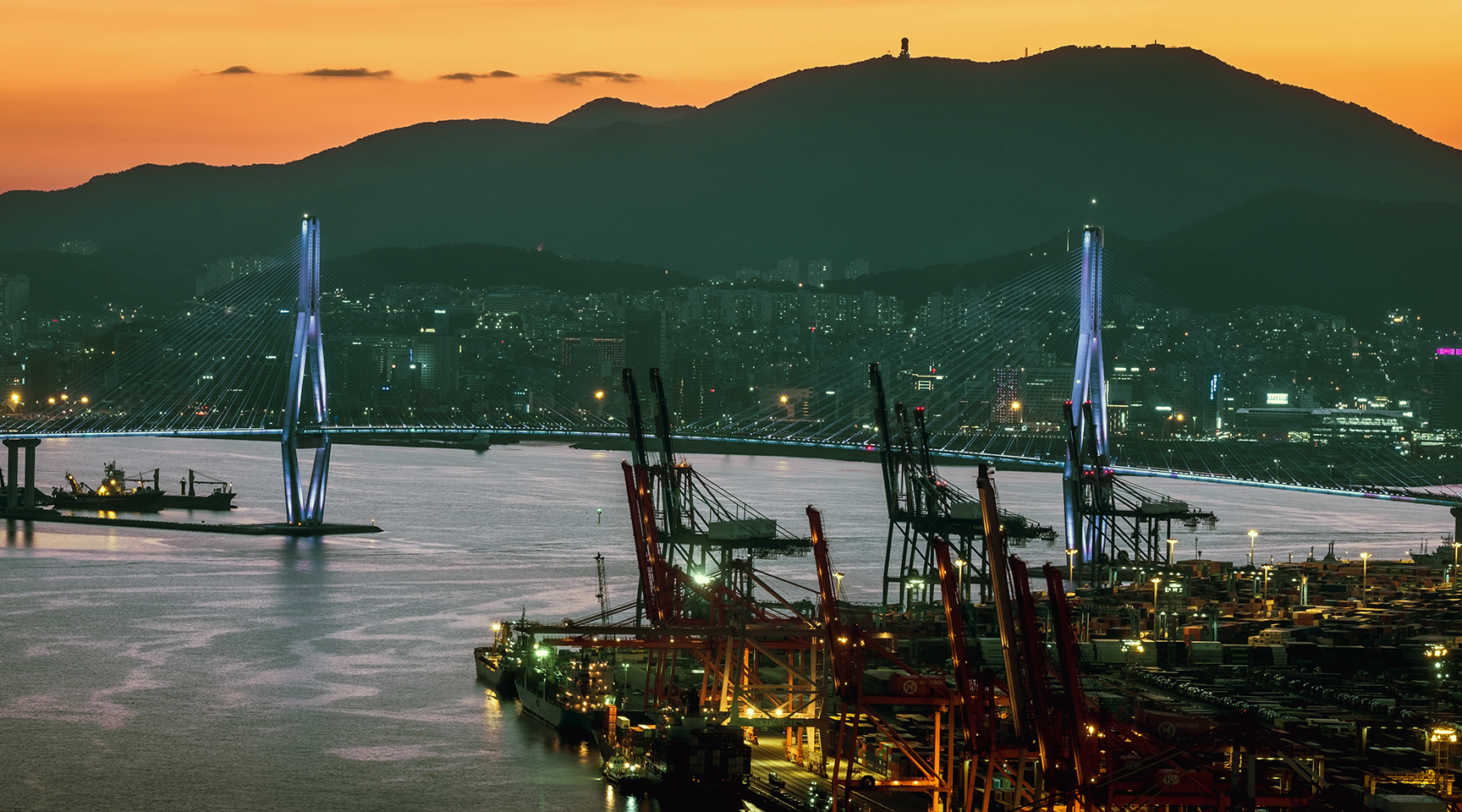
This performance cemented the terminal’s status as one of the world’s leading maritime hubs and the world’s second-largest port in terms of transshipment operations—a fact that explains much of its growing importance in international trade.
Heritage and Development
The selection of Busan carried strong symbolic significance. The city epitomizes much of the transformation Korea has undergone over the past seven decades. During the Korean War, it served as the country’s provisional capital and was one of the few territories that never fell under North Korean control. Today, it is South Korea’s main port, one of the world’s largest logistics hubs, and a center of innovation seeking to establish itself as a leader in smart ports, digitalization, and environmental transition.
For Lee Byong Hyun, chair of the 48th Session of the World Heritage Committee, the meeting marked a milestone for South Korea. “World Heritage is much more than a relic of the past; it represents an invaluable and irreplaceable asset for all of humanity,” he said, expressing his hope that the Busan meeting “will serve as a starting point for strengthening capacity-building and advancing governance in the face of emerging challenges such as climate change and rapid technological transformation.”
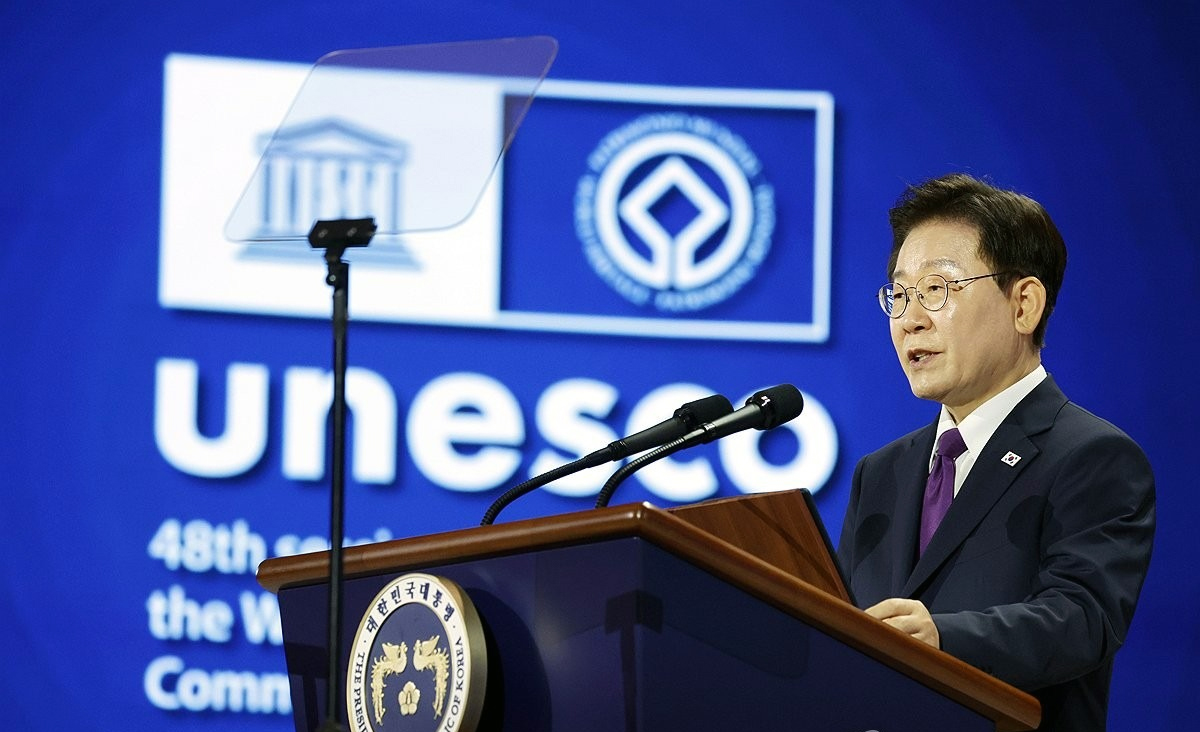
South Korean President Lee Jae Myung spoke during the opening ceremony of the 48th session of the UNESCO World Heritage Committee in Busan. Credit: Yonhap.
That contrast between memory and the future was also evident in the Committee’s own agenda. While the protection of ecosystems and cultural sites of universal value was being debated, the city showcased infrastructure designed to meet the challenges of 21st-century international trade, featuring automated terminals, digitized processes, and a growth strategy aligned with energy efficiency and emissions reduction goals promoted by the Busan Port Authority as part of its smart port development program.
The most anticipated decision came on July 25, when the Committee approved the expansion of the Korean Tidal Flats (Getbol), incorporating the areas of Yeosu, Goheung, Muan, and Seosan. The amendment expanded the natural site inscribed in 2021 and transformed it into a serial property comprising six components distributed along the country’s western and southern coasts. The organization determined that the tidal flats continue to meet the Convention’s criteria, which are reserved for habitats essential to the conservation of biodiversity and threatened species, particularly within the Yellow Sea ecosystem and the East Asia-Australasia Flyway.
Paradoxically, that decision regarding environmental conservation took place in one of Asia’s most dynamic cities in terms of logistics infrastructure. This coexistence of natural heritage, urban development, and foreign trade accounts for much of the identity that Korea sought to project during the meeting.
Port of the Future
While Busan welcomed the UNESCO delegations, its port was cementing another leadership role on a global scale. Over the past decade, container traffic grew by 21.8%, rising from 19.45 million TEUs in 2016 to 24.88 million TEUs in 2025—the highest volume in its history. This performance ranked the port among the world’s fastest-growing and confirmed its position as one of the leading logistics hubs for international maritime trade.
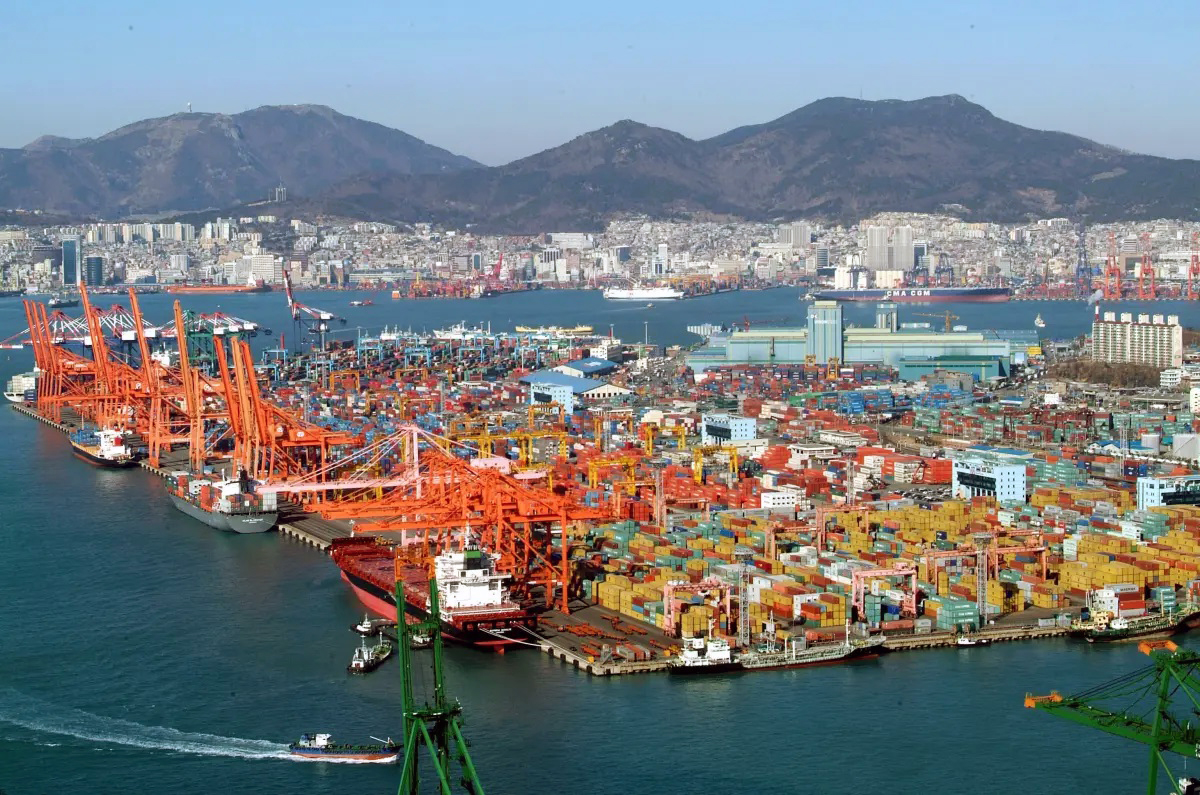
This growth was driven primarily by transshipment operations, which increased by 4.4% to reach 14.1 million TEUs—equivalent to nearly 57% of total cargo volume—allowing Busan to retain its second-place global ranking in this segment, trailing only Singapore. According to the Busan Port Authority, this performance was made possible by the expansion of the New Port of Busan, the implementation of automated infrastructure, and a sustained policy of attracting investments totaling more than 14 trillion won (US$9.5 billion) over the past three years.
Song Sang-geun, president of the Busan Port Authority (BPA), stated that “2025 was a significant year in which the Port of Busan demonstrated its operational capabilities to the world despite the uncertainty in the global maritime market.” He assured that the agency will continue to “strengthen cooperation with major international shipping lines” and further “infrastructure expansion and digital innovation” to consolidate Busan’s position as the world’s leading transshipment hub.
Beyond the numbers, the port has become one of the pillars of the national strategy to strengthen Korea’s logistics competitiveness. Terminal automation, process digitization, the gradual electrification of port equipment, and programs aimed at reducing emissions are all part of the development of the so-called “smart port”—a model that combines operational efficiency with environmental goals and seeks to address both trade growth and international decarbonization commitments.
During the presentation of the BPA’s annual plan, then-President Kang Jun-seok summarized the port’s long-term vision: “Our goal is to maintain our status as a global hub port, expand port functions as a node connecting maritime, air, and land transportation, and build a world-leading smart port through digitization based on artificial intelligence, the Internet of Things, and big data.”
In that sense, Busan represents a rare synthesis: a city that preserves ecosystems designated as World Heritage Sites while developing one of the most important port complexes on the planet. This combination of conservation, innovation, and connectivity explains why it is now a benchmark for both international diplomacy and global maritime transport and logistics—two areas that rarely converge so clearly within a single territory.